When most collectors think of the Defiance by Stanley line, they picture the familiar American-made economy planes produced between 1929 and the early 1950s. These planes are generally well understood, with recognizable features such as folded lateral adjusters, simplified frogs, and distinctive Defiance-marked irons.
What is far less understood is the existence of Canadian-made Defiance planes.
The deeper I dive into the Defiance line, the more convinced I become that Stanley Canada deserves its own separate study.
Why Canadian Defiance Planes Matter
Many collectors assume that Stanley products manufactured in Canada closely mirrored those produced in the United States. While that may be true in some cases, evidence suggests that Stanley Canada often followed its own production timeline and utilized tooling, patterns, and manufacturing practices long after similar features had disappeared from American production.
This phenomenon is not unique to Defiance planes.
In an article titled The Mystery of Stanley Canada, plane researcher and dealer Bob Kaune documented a Canadian-made Stanley plane carrying a Sweetheart-era cutter stamp dated to the second quarter of 1945. By that point, the Sweetheart trademark had been absent from U.S.-made Stanley planes for roughly two decades.
That discovery raises an important possibility:
If Stanley Canada continued producing planes with older Stanley features years after they disappeared in the United States, could the same thing have happened within the Defiance line?
While definitive answers remain elusive, the evidence suggests that Canadian production deserves closer examination.
The Canadian Defiance 1203 Example
One of the most interesting Canadian Defiance planes I have examined through photographs is a Canadian-made Defiance 1203 corrugated smoothing plane.
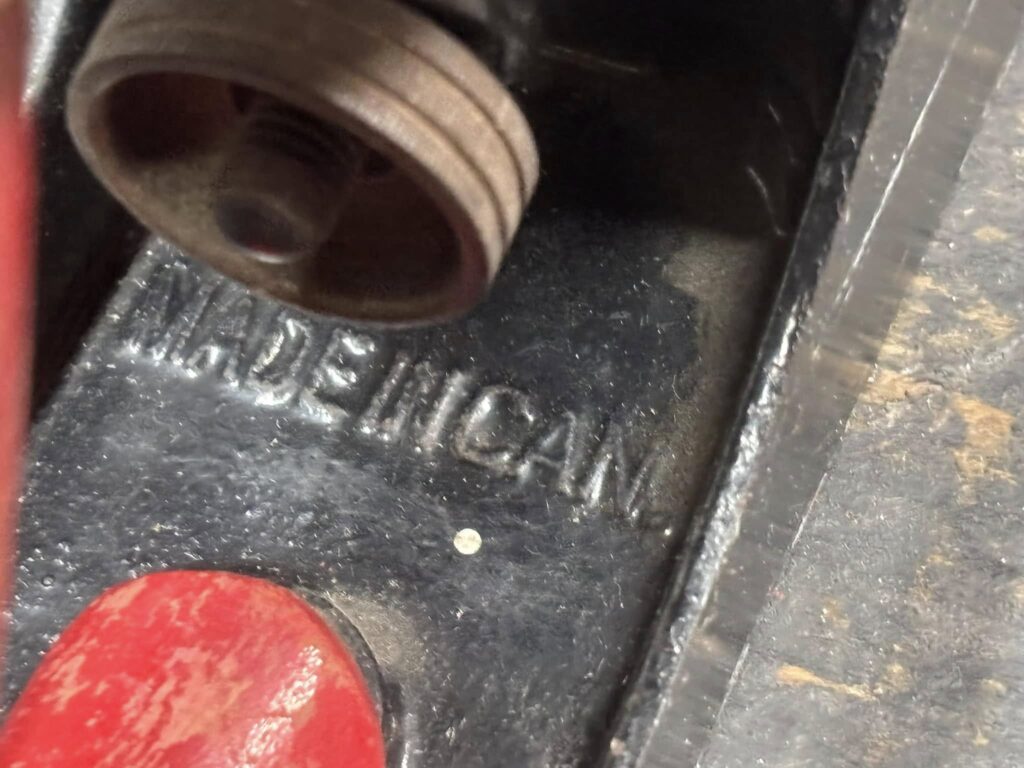
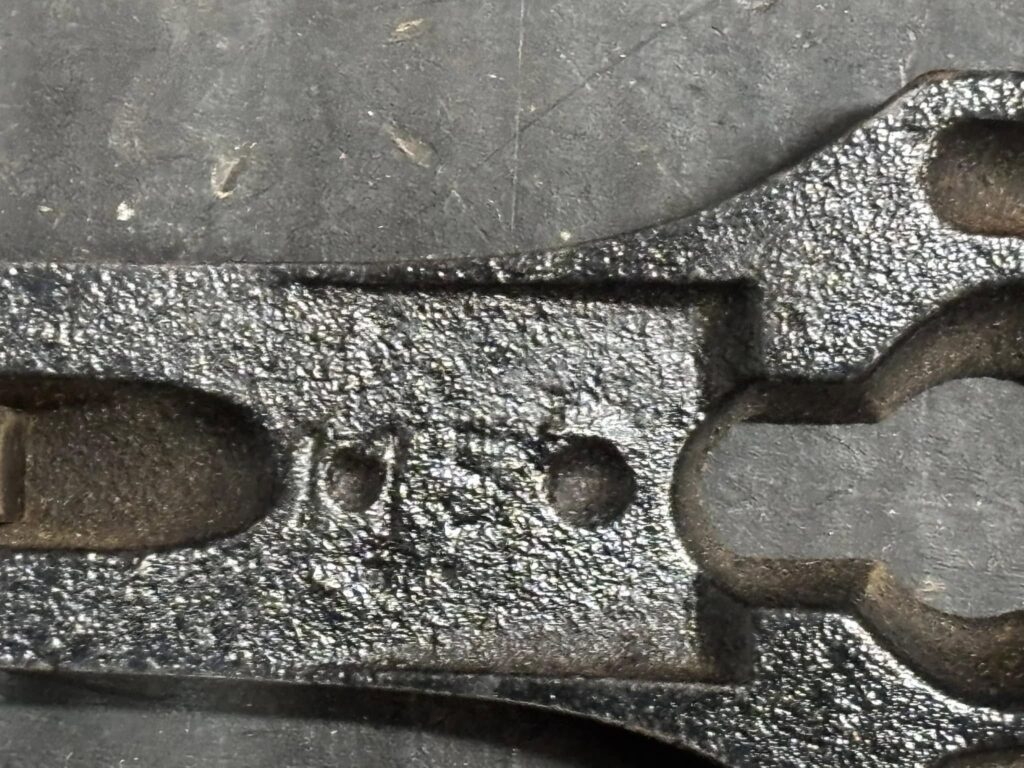
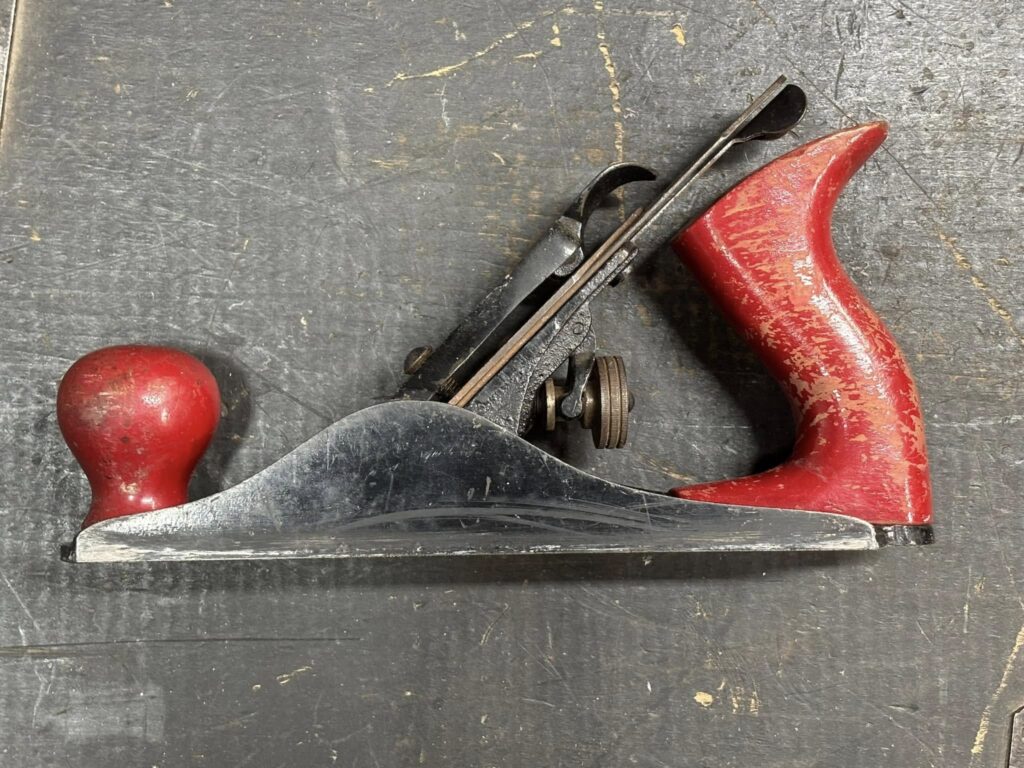
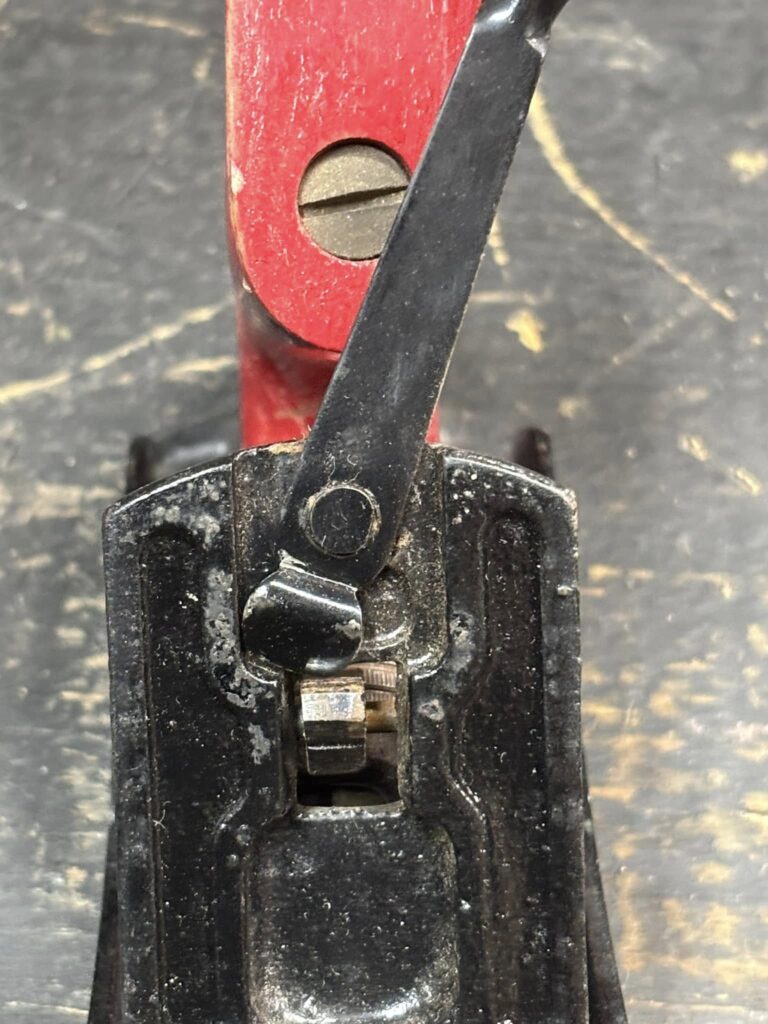
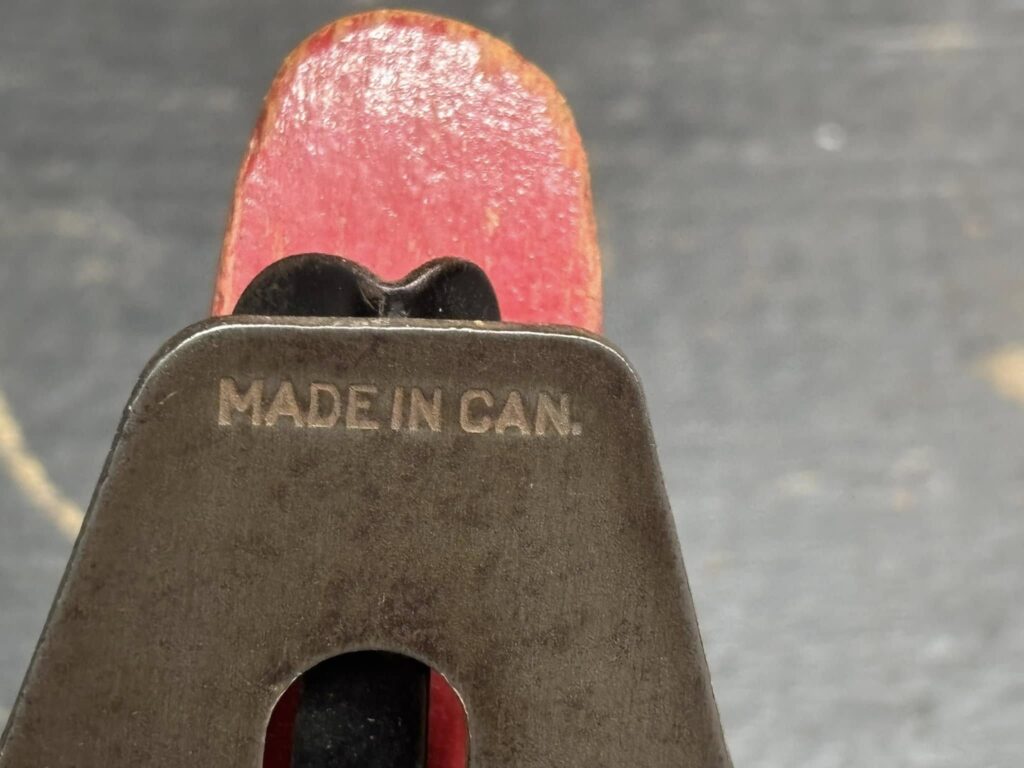
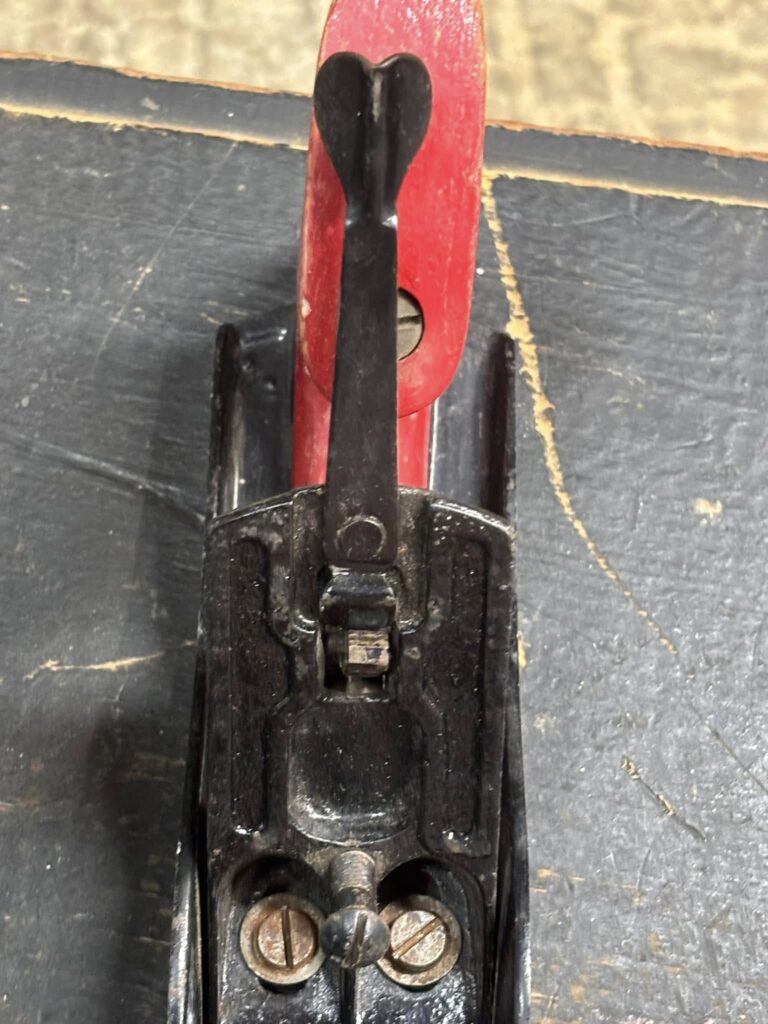
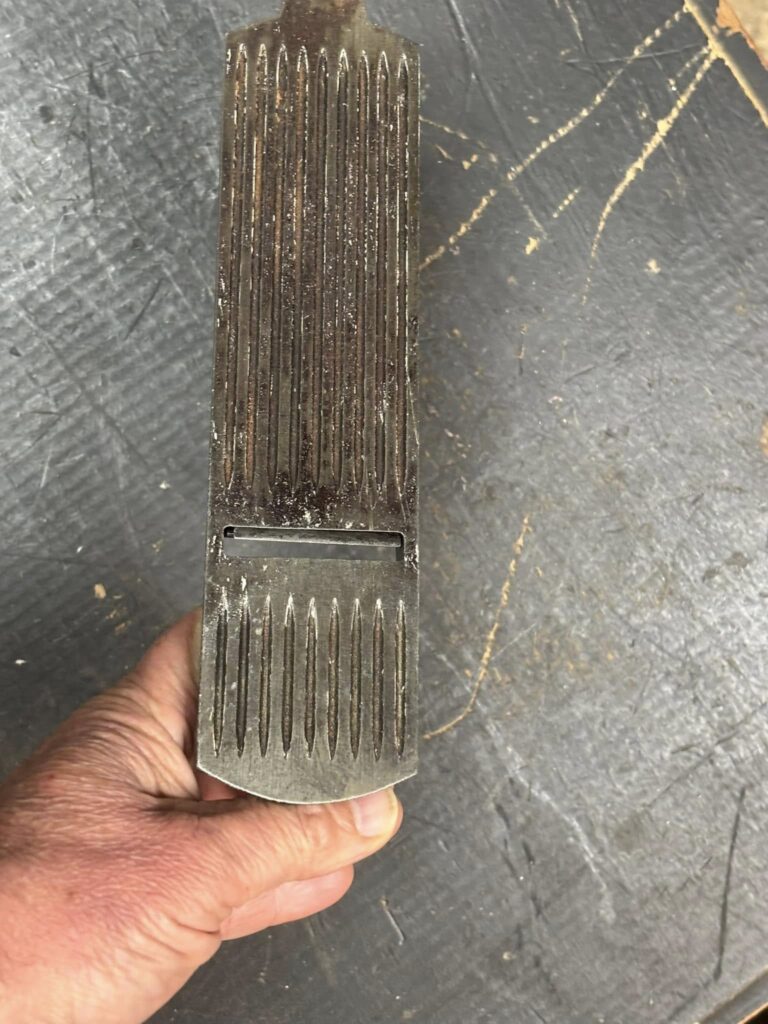
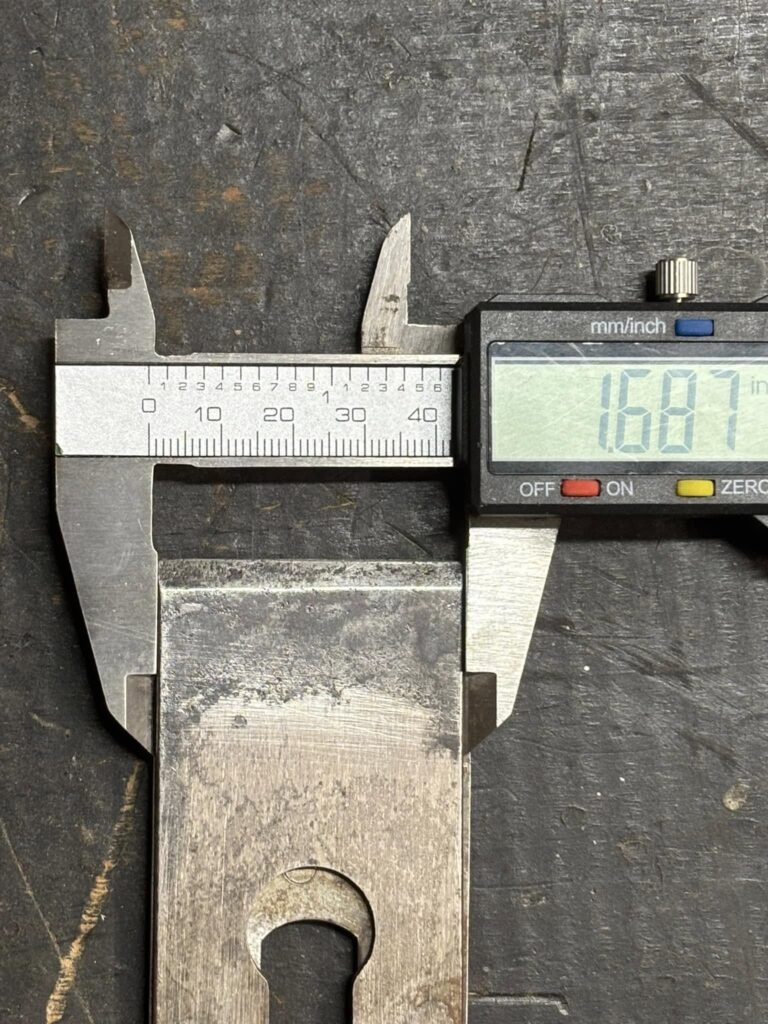
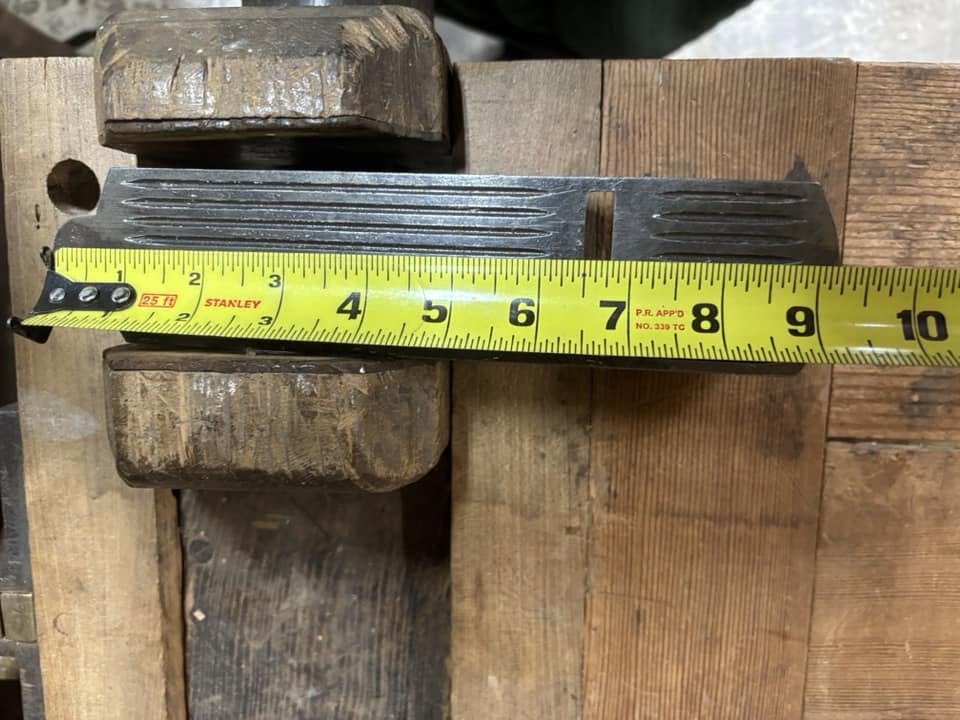
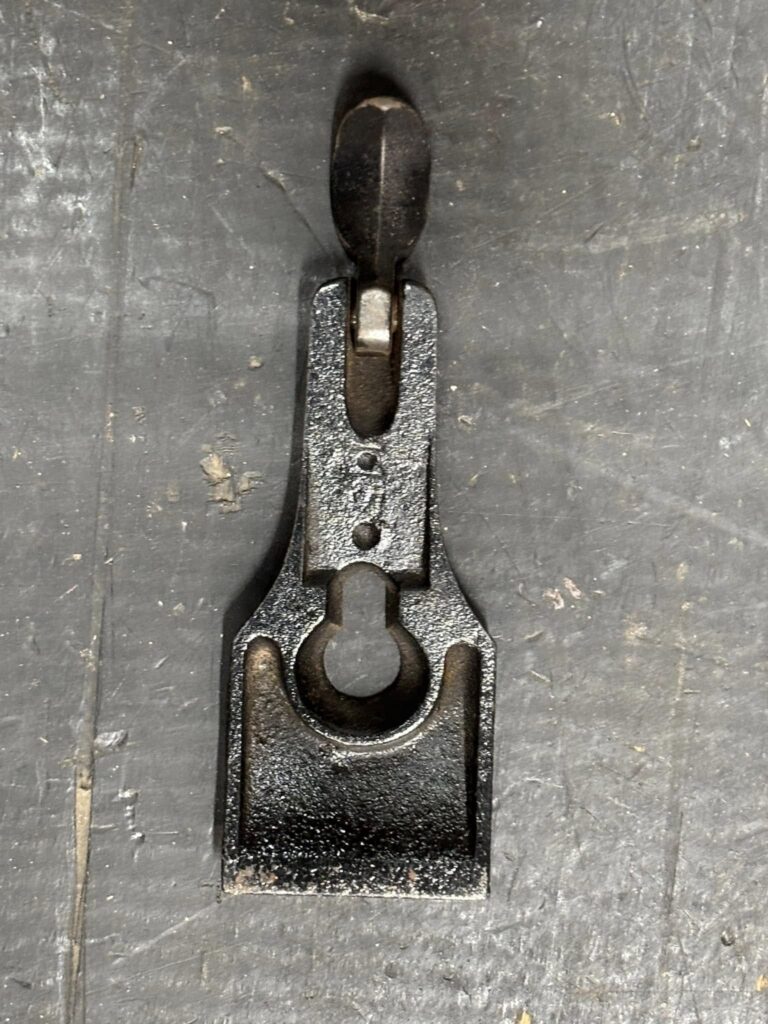

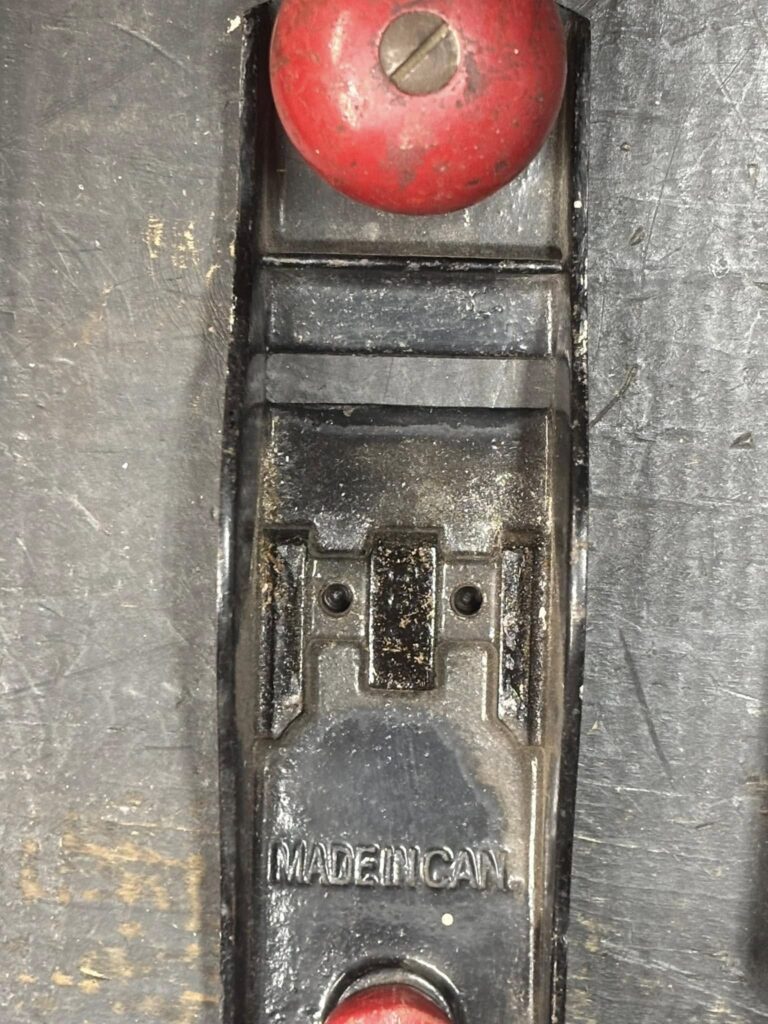
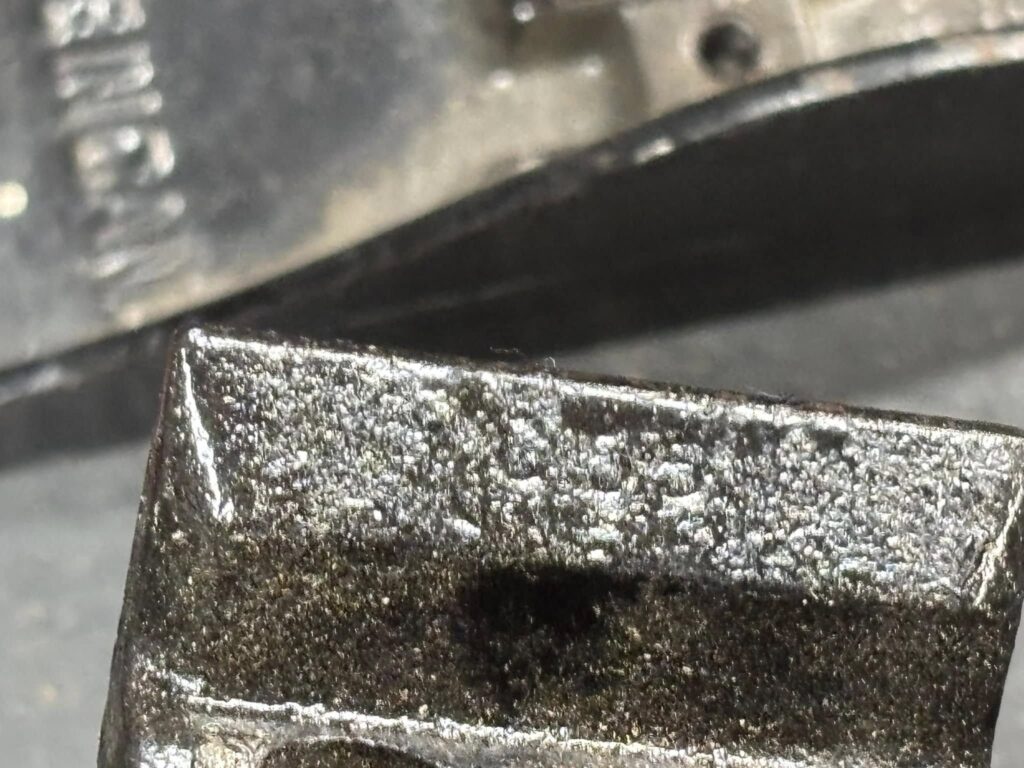
Several details immediately stand out.
Distinctive Tote Shape
Most Defiance collectors are familiar with the standard tote profile found on American-made Defiance planes.
Typically, the sides are relatively flat and somewhat simplified compared to Stanley’s premium offerings.
The Canadian example differs noticeably.
The tote displays:
- More rounded contours
- Softer transitions
- A shape that more closely resembles contemporary Stanley production
While subtle, the difference becomes obvious when placed beside a typical American Defiance tote.
Defiance Iron Marking
The iron on the Canadian example is clearly stamped:
DEFIANCE
with:
MADE IN CANADA
appearing underneath.
This is significant because it confirms that Stanley Canada was not merely assembling planes from imported parts. At least some tooling and branding specific to the Defiance line existed within Canadian production.
Folded-Wing Lateral Adjuster
Another characteristic feature is the lateral adjuster.
Canadian examples often display the familiar folded-wing style associated with Defiance planes rather than the twisted style found on certain Eclipse-branded planes.
This detail helps reinforce the identification of the plane as a genuine Defiance product rather than a rebadged equivalent.
Canadian Manufacturing May Have Followed Its Own Timeline
One of the most intriguing lessons from studying Stanley Canada is that production timelines do not always align neatly with American type studies.
Collectors often rely on U.S.-based Stanley type studies to estimate manufacturing dates and identify features.
Those studies are invaluable.
However, Canadian production appears to have operated under different circumstances.
Evidence suggests Stanley Canada may have:
- Continued using older tooling
- Continued producing older component styles
- Retained trademarks longer than U.S. factories
- Mixed features from different production eras
This does not mean Canadian planes are impossible to date.
It simply means we should be cautious when applying American dating systems directly to Canadian-made tools.
The Need for a Canadian Defiance Study
At present, there is no comprehensive type study dedicated specifically to Canadian Defiance planes.
As more examples surface, several questions deserve further investigation:
Questions Worth Exploring
- Were Canadian Defiance planes produced throughout the entire Defiance production run?
- Did Stanley Canada manufacture Defiance-specific castings?
- Were Canadian Defiance planes assembled from Canadian-made components or imported American parts?
- Did Canadian production continue after certain models disappeared from U.S. catalogs?
- Were Canadian tote and knob patterns unique to Canada?
- How long were Defiance-branded irons produced in Canada?
These questions remain largely unanswered.
Why Collectors Should Document Canadian Examples
Every documented Canadian Defiance plane adds another piece to the puzzle.
Collectors can help by recording:
- Model numbers
- Casting marks
- Iron markings
- Tote and knob profiles
- Frog designs
- Lateral adjuster styles
- Provenance whenever available
Even a single photograph can provide valuable clues.
The Canadian-made Defiance 1203 discussed here demonstrates how small differences can challenge long-held assumptions about the Defiance line.
Final Thoughts
The history of Stanley’s Defiance line is far from complete.
Canadian production may represent one of the least-studied areas within the entire Defiance tool line. Evidence already suggests that Stanley Canada followed its own path, retaining older features and manufacturing practices long after they disappeared from American production.
As more examples come to light, we may discover that the Canadian Defiance story is not simply a footnote to the American line—but an important chapter of its own.
For collectors and researchers alike, that makes every Canadian-made Defiance plane worth a closer look.
Photo Credits
Special thanks to Michael Toivonen for permission to use photographs of the Canadian-made Defiance 1203 featured in this article. The main article image was created using artificial intelligence for illustrative purposes and may not accurately depict actual Defiance by Stanley planes, Canadian-made Defiance planes, or period advertising materials. Photographs used elsewhere in this article are credited to their respective owners.
About the Defiance Project
This article is part of the ongoing research effort behind:
The Complete Defiance by Stanley Tool Line Reference Guide (1929–1953)
A comprehensive collector’s reference dedicated to documenting and preserving the history of Stanley’s Defiance line of tools.
