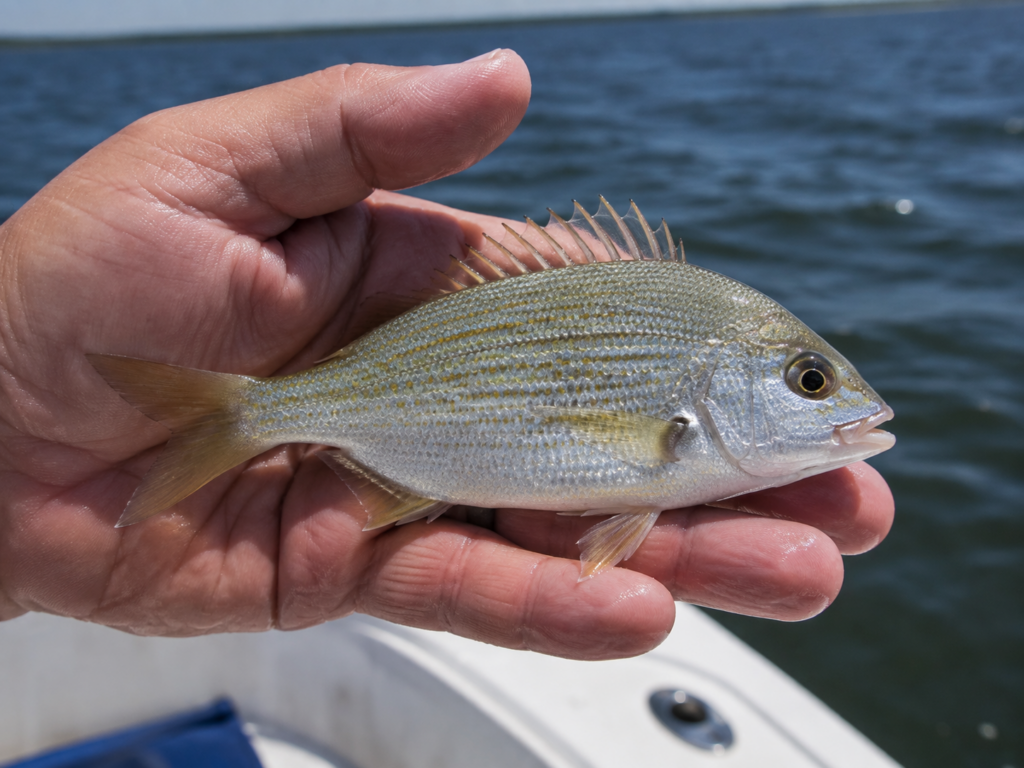
Every fishing trip has to begin somewhere, and along the coast it often begins with a fish that most people barely notice. Pinfish are small, common, aggravatingly good at stealing bait, and not especially impressive when held beside the boat. They are also one of the most useful links in the saltwater food chain.
A pinfish may not look like much, but almost everything larger is willing to eat one. Snapper, grouper, jacks, cobia, mackerel, barracuda, and sharks all recognize a struggling baitfish as an opportunity. That makes the lowly pinfish more than a nuisance around the dock. It makes it the beginning of a much larger fishing story.
The basic idea is simple: catch something small and use it to catch something bigger. Sometimes that means lowering a live pinfish beside a bridge piling. Sometimes it means sending one toward the bottom over a reef or wreck. Other times, a pinfish becomes cut bait for something large enough to make the reel scream.
No matter where the chain ends, it often starts with the same little fish.
Starting With Nothing
There is a type of fishing challenge that has become popular on YouTube in which the angler begins with no bait at all. The only things available are a rod, a reel, and a few artificial lures. The first goal is not to catch a trophy. It is simply to catch something that can become bait.
A tiny jig, spoon, Sabiki rig, soft plastic, or other small lure might produce a pinfish. That pinfish is then used to catch something larger. The next fish may become bait for an even larger predator, and the process continues one link at a time.
The challenge is sometimes described as climbing the food chain. A pinfish might lead to a grunt, snapper, ladyfish, jack, or another midsized fish. That fish may then become bait for a grouper, cobia, large barracuda, or shark.
It sounds easy when condensed into a short video. Catch bait, catch a bigger fish, and repeat until something enormous appears beside the boat. In reality, every step can go wrong. The first lure may not produce. The bait may die in the livewell. A larger fish may steal it without finding the hook. The leader may break, the hook may pull, or the next fish in the chain may simply refuse to cooperate.
That uncertainty is part of the fun. You are not merely waiting for a bite. You are building the entire fishing trip from the bottom upward.
Catching the First Pinfish
Pinfish are commonly found around docks, bridge pilings, seawalls, grass beds, reefs, and other areas where small fish gather for food and shelter. They are usually not difficult to catch once you locate them, although they can peck at a bait with astonishing speed.
A small hook tipped with shrimp, squid, fish, or another tiny piece of bait will usually get their attention. Small artificial lures can also work, which is important when attempting the no-bait challenge. A little jig or soft plastic moved near structure may be enough to start the chain.
The first pinfish may not feel like much of an accomplishment, especially when larger fish are the real goal. Nevertheless, that first baitfish changes the entire day. You are no longer trying to convince a fish to attack plastic or metal. You now have something that looks, smells, swims, and behaves like food.
That is when the real fishing begins.
Using Pinfish as Live Bait
A healthy live pinfish is difficult for a predator to ignore. It flashes in the water, vibrates through the line, and struggles whenever something larger approaches. That natural movement does more than any artificial lure can perfectly imitate.
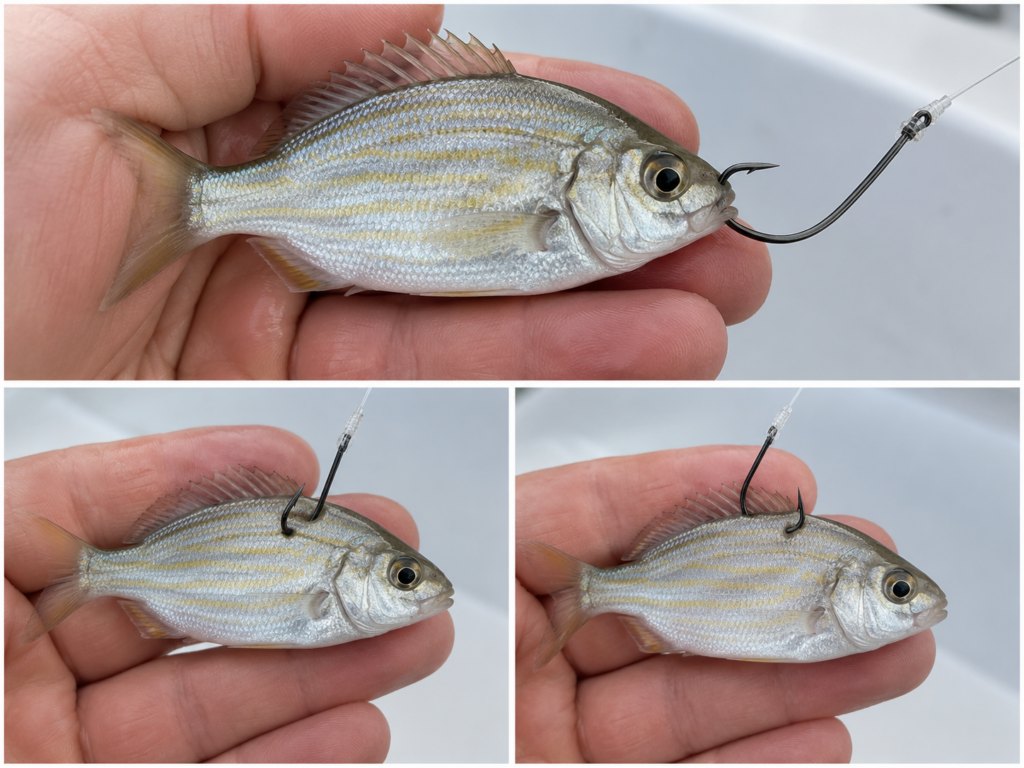
How the pinfish is hooked depends on where it will be fished and how you want it to move. When drifting or allowing the bait to swim naturally, the hook can be passed carefully through the nostril area. The goal is to hold the fish securely without blocking its mouth or damaging it more than necessary.
Another common placement is through the tough skin behind and slightly above the dorsal fin. The hook must remain shallow enough to avoid the spine. A pinfish hooked this way often swims downward and away from the pressure of the line, which can be useful when fishing beneath the boat or near structure.
A live baitfish can also be hooked nearer the tail when you want it to swim away more aggressively, although the correct placement depends on the presentation and the fish being targeted. Wherever the hook is placed, the point should remain exposed. Burying the point deeply in the bait may keep it attached, but it can also prevent a clean hookup when a predator strikes.
Pinfish are tough, but they are not indestructible. Handle them with wet hands, avoid squeezing them, and return them to the water quickly. A lively pinfish is far more convincing than one spinning weakly at the end of the line.
When Cut Bait Works Better
Live bait is exciting because you can feel it moving and often sense the moment when something begins to chase it. Cut bait takes a different approach. Instead of relying mainly on movement, it releases scent and oil into the water.
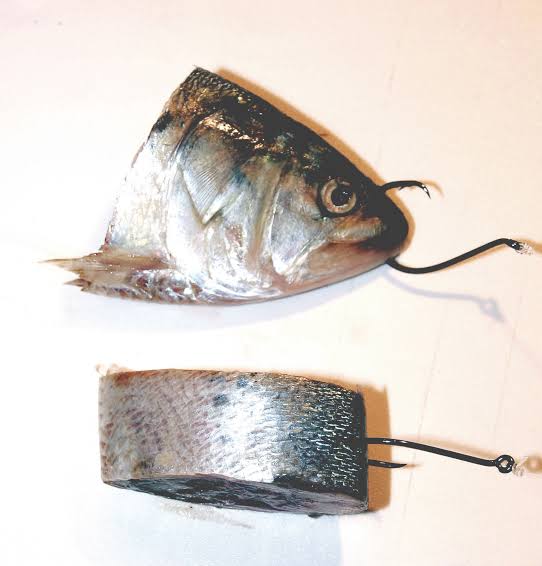
A pinfish can be cut into body sections, strips, or chunks depending on the size of the bait and the intended target. The head can also be especially effective because it is tough, stays on the hook well, and contains plenty of scent. Larger predators are not always looking for a perfect, healthy fish. They are often perfectly willing to eat an easy piece of food lying near the bottom.
The hook should pass through tough skin or firm flesh rather than soft tissue that will tear away during the cast. Just as with live bait, the point and barb should remain exposed. A bait can look beautiful on the hook and still be useless if the hook cannot reach the fish.
Cut bait is especially useful when current, depth, rough handling, or repeated strikes would quickly kill a live pinfish anyway. It can also remain effective after smaller fish have damaged it. A ragged chunk of pinfish may not look impressive to the angler, but the scent drifting through the water may be exactly what brings a larger fish closer.
Keeping the Rig Simple
Fishing rigs can become as complicated as an angler allows them to become. For pinfish, complicated is not always better.
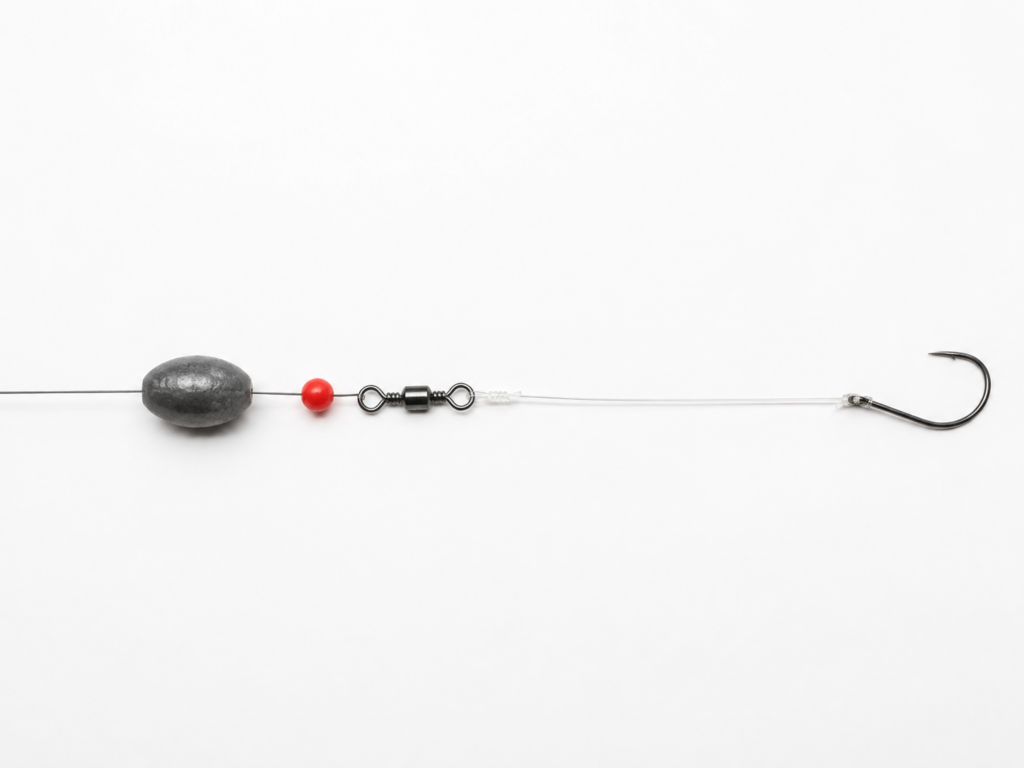
A strong leader, a dependable swivel, an appropriate sinker, and a sharp circle hook will cover a large percentage of situations. The exact line strength, hook size, and amount of weight depend on the bait, current, depth, structure, and fish being targeted.
When fishing near the bottom, the sinker should be heavy enough to keep the bait in the productive area without making the entire rig feel like an anchor. Too little weight allows the bait to drift away from the structure. Too much weight can reduce its natural movement and make subtle bites harder to detect.
The leader must also match the surroundings. Light leader may produce more bites in clear water, but it will not survive long around sharp rocks, barnacle-covered pilings, wreckage, or a predator with abrasive skin or teeth. Heavy tackle provides insurance, but it can also make a small bait appear unnatural.
There is no single perfect rig for every situation. The best rig is the one that delivers the pinfish where the larger fish are feeding and gives you a reasonable chance of landing whatever decides to eat it.
Letting the Circle Hook Work
Circle hooks are especially useful when fishing live or cut bait because they are designed to move toward the corner of a fish’s mouth as the line tightens. They are not meant to be used with a dramatic hook-set like a traditional J-style hook.
When a fish takes the bait, the better response is often to allow the line to come tight and begin applying steady pressure. Jerking the rod too early can pull the bait and hook away before the circle hook reaches its proper position.
That can be difficult when a large fish suddenly grabs a pinfish and begins running. Every instinct says to swing the rod as hard as possible. Patience usually produces better results. Let the fish turn, allow the rod to load, and keep steady pressure as the hook finds the corner of the mouth.
No method guarantees a perfect hookup, but a properly sized circle hook and an exposed point greatly improve the odds.
Fishing Where Bigger Fish Live
A pinfish drifting through empty water is only a pinfish drifting through empty water. The bait must be placed where larger predators are likely to hunt.
That may be beside a bridge piling, along a rock ledge, near a channel edge, over a reef, around a wreck, beneath a school of bait, or close to another form of structure. Bigger fish often use these places as cover and feeding stations. They may remain hidden until an injured or struggling baitfish enters their territory.
The difficulty is getting close enough without giving the fish an immediate escape route. A grouper may strike a pinfish and turn toward a hole almost instantly. A snapper may dive into a wreck. A shark may run into open water and take line at a speed that makes the reel feel far too small.
The first few seconds often determine the outcome. Near heavy structure, the angler may need to apply pressure quickly. In open water, allowing the fish to run may be safer. The pinfish may have started the encounter, but once a larger fish takes it, the situation can change very quickly.
Climbing the Bait Chain
The most entertaining version of this style of fishing is when every catch becomes the next bait.
You begin with a lure and catch a pinfish. That pinfish catches a grunt or snapper. The next fish catches a larger jack, ladyfish, or another strong baitfish. Eventually, something large enough to test the entire outfit takes the next offering.
There is no fixed order. The chain depends entirely on what lives in the area and what happens to be feeding. A pinfish might go directly into the mouth of a respectable grouper. On another day, several intermediate steps may be necessary before the bait becomes large enough to interest the biggest predators.
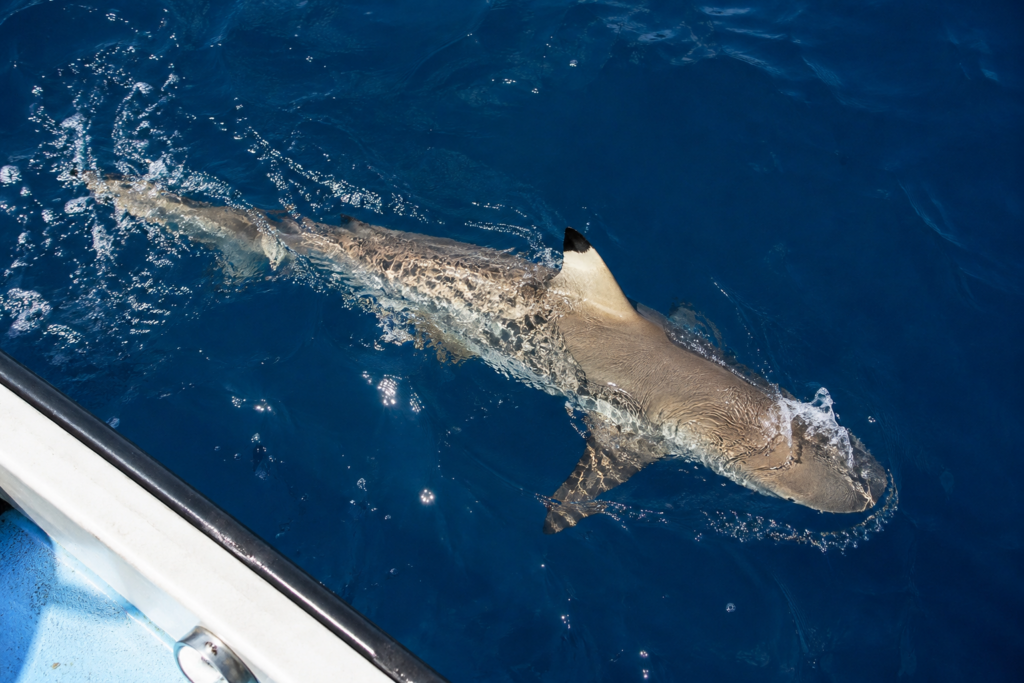
At some point, the little baitfish that started the day may lead to something that seems almost unreasonable. A heavy grouper may attempt to return to the reef. A cobia may appear beside the boat. A blacktip shark may circle near the surface, showing the dark tips of its fins as it pulls against the rod.
That is the moment that makes the entire process memorable. The fight did not begin when the shark or grouper took the bait. It began much earlier, with a tiny lure and the first pinfish of the day.
From Pinfish to Shark
A five-foot blacktip shark is a long way from the bait-stealing pinfish caught beside a dock. Yet the food chain connects them.
A pinfish may become bait for a larger fish, and that larger fish may become the offering that finally attracts the shark. The tackle becomes heavier, the leader becomes stronger, and the amount of preparation increases, but the basic principle remains unchanged. Something small leads to something larger.
Shark fishing also demands more care than ordinary bait fishing. The animal is powerful, the tackle is under tremendous strain, and everyone on the boat must know what is happening. Safe handling, quick release practices when releasing the fish, and respect for local fishing regulations are part of doing it responsibly.
The goal is not to drag a shark onto the deck for a heroic photograph. Seeing a healthy blacktip alongside the boat, still supported by the water and ready to swim away, is more than enough to understand how far the day has progressed.
You started with nothing but a lure. Then came the pinfish. Several steps later, there is a shark beside the boat.
That is a fishing trip worth remembering.
The Lowly Pinfish Deserves More Credit
Pinfish rarely receive the admiration given to glamorous game fish. Nobody plans a major expedition around catching a six-inch pinfish. They are commonly dismissed as bait thieves, pests, or something to toss into the livewell without a second thought.
Yet they are one of the most dependable starting points an angler can have.
They are common enough to catch regularly, tough enough to remain active on a hook, and familiar to nearly every predator in coastal water. They work alive, they work as cut bait, and they can be fished from the surface to the bottom.
More importantly, pinfish remind us that fishing is not always about beginning with the largest lure, the heaviest tackle, or the grandest goal. Sometimes the best days are built gradually. One small success creates the opportunity for the next, and the next fish opens the door to something larger.
The pinfish is not the trophy. It is the first link in the chain. And sometimes that chain leads all the way to a monster.
